


Why Buying at Highs can be a Winning Strategy
Buy low….sell high, it’s that easy! (Only in pipe dreams)
With the markets hitting or near new highs this month, one of the most frequent concerns we hear is should I wait for or expect a dip. However, waiting on the sidelines during a market surge often can be detrimental to long-term returns as opposed to investing at peak levels.
We feel that market highs are not warning signs of an impending crash—they are natural milestones of a growing economy. We always say, for a market to go higher, you need to hit new highs!
One reason for this is that all-time highs are far more common than most investors realize. Between 2021 and 2025, the S&P 500 continuously blew through highs, and if you were trying to wait, you missed out.
Here are some stats for those highs:
S&P 500 Record Highs (2021–2025):
- 2021: 70 record highs
- 2022: 1 record high (set on trading day 1)
- 2023: 0 record highs (market consolidated/recovered)
- 2024: 57 record highs
- 2025: 38 record highs
5-Year Total: 166 new all-time highs.
Therefore, you can see, holding cash in anticipation of a pullback means sitting out substantial market momentum.
Three Reasons Investing at Market Highs Have Worked
New Highs Tend to Follow New Highs
Stock market gains tend to cluster together in long-term bull markets. Reaching an all-time high usually confirms strong underlying earnings, solid macroeconomic momentum, and investor sentiment buying into those highs. So highs usually only occur when the economy has been strong.
The High Cost of Waiting for a "Dip"
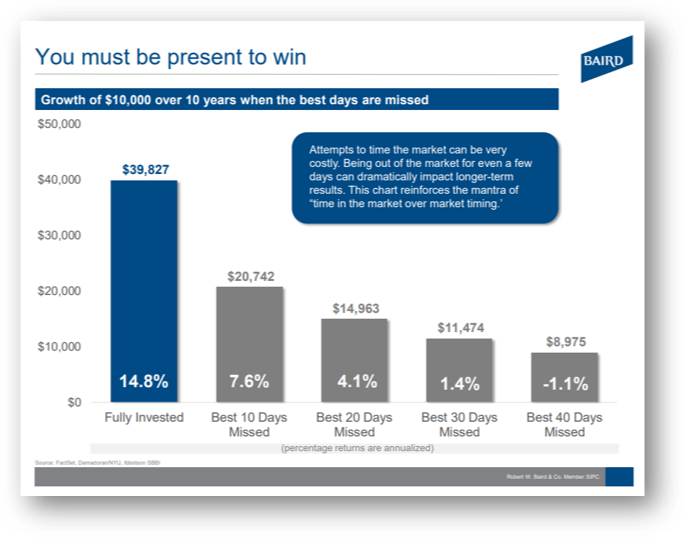
Attempting to time the market is nearly impossible to do consistently. If you moved your money to cash in early 2024 when the S&P 500 first hit a new high, you would have missed nearly 50 subsequent high marks over the rest of that year alone. The cost of missing out on market growth almost always exceeds the cost of enduring a short-term pullback.
Time in the Market Has Historically Beaten Timing the Market
Sustained long-term growth is driven by corporate earnings and compounding returns, not market timing. Whether you invest via monthly Dollar-Cost Averaging (DCA) or lump-sum deposits, long-term historical data shows that market highs are simply stepstools for the future, even higher peaks.
*The information offered is provided to you for informational purposes only. Past performance is not indicative of future results and diversification does not ensure a profit or protect against loss. All investments carry some level of risk, including loss of principal. An investment cannot be made directly in an index. Robert W. Baird & Co. Incorporated.